Nomadentum – Excerpts & Displays of Displacements in The Move
2015–2016
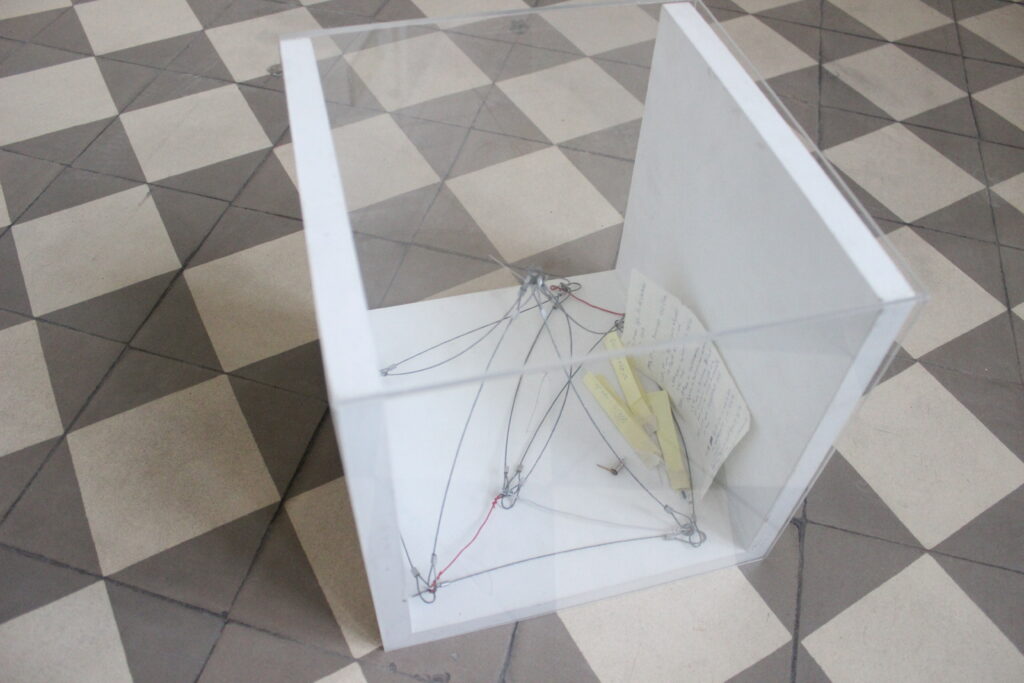
Single objects: approx. 20 × 20 × 20 cm
Digital collages: various dimensions
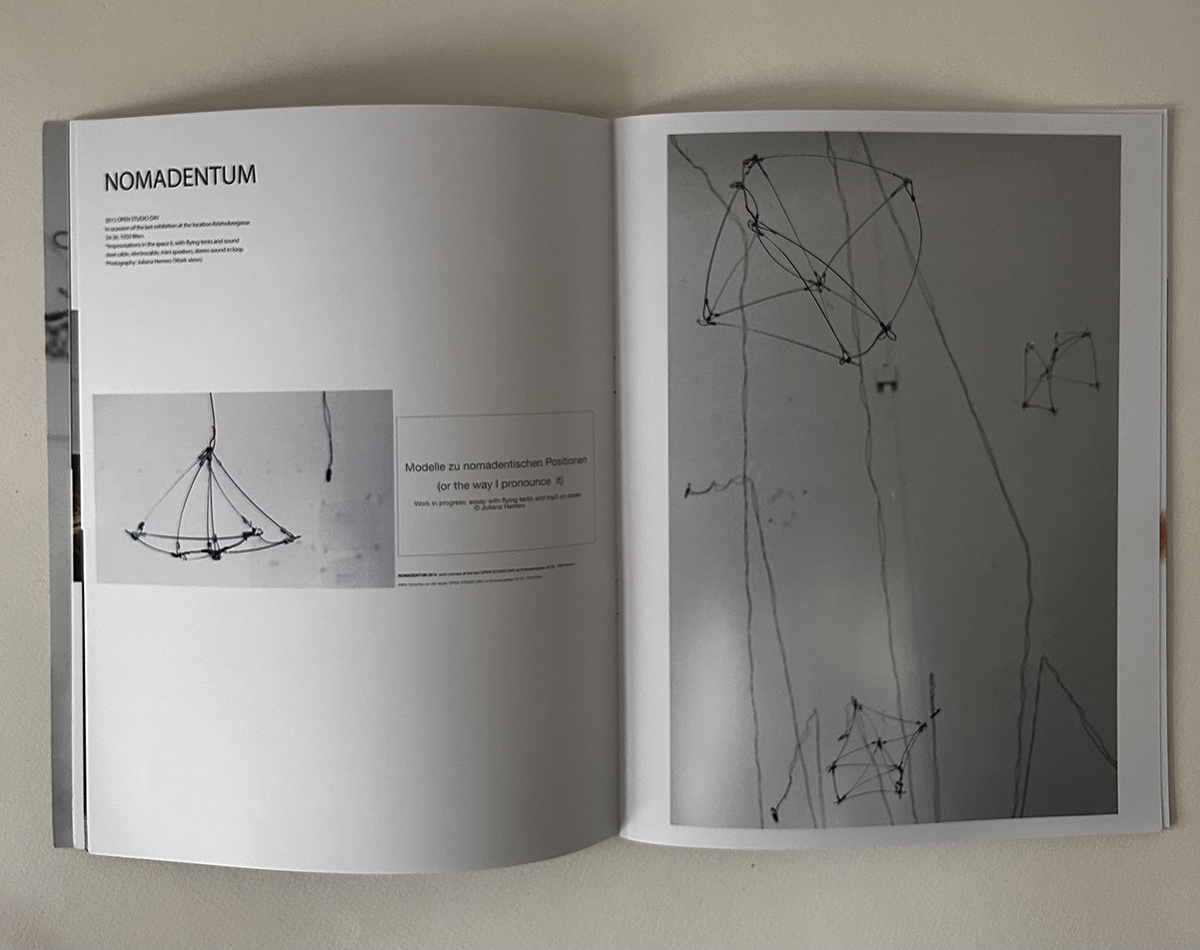
Excerpts from the mixed-media installation with sound Nomadentum
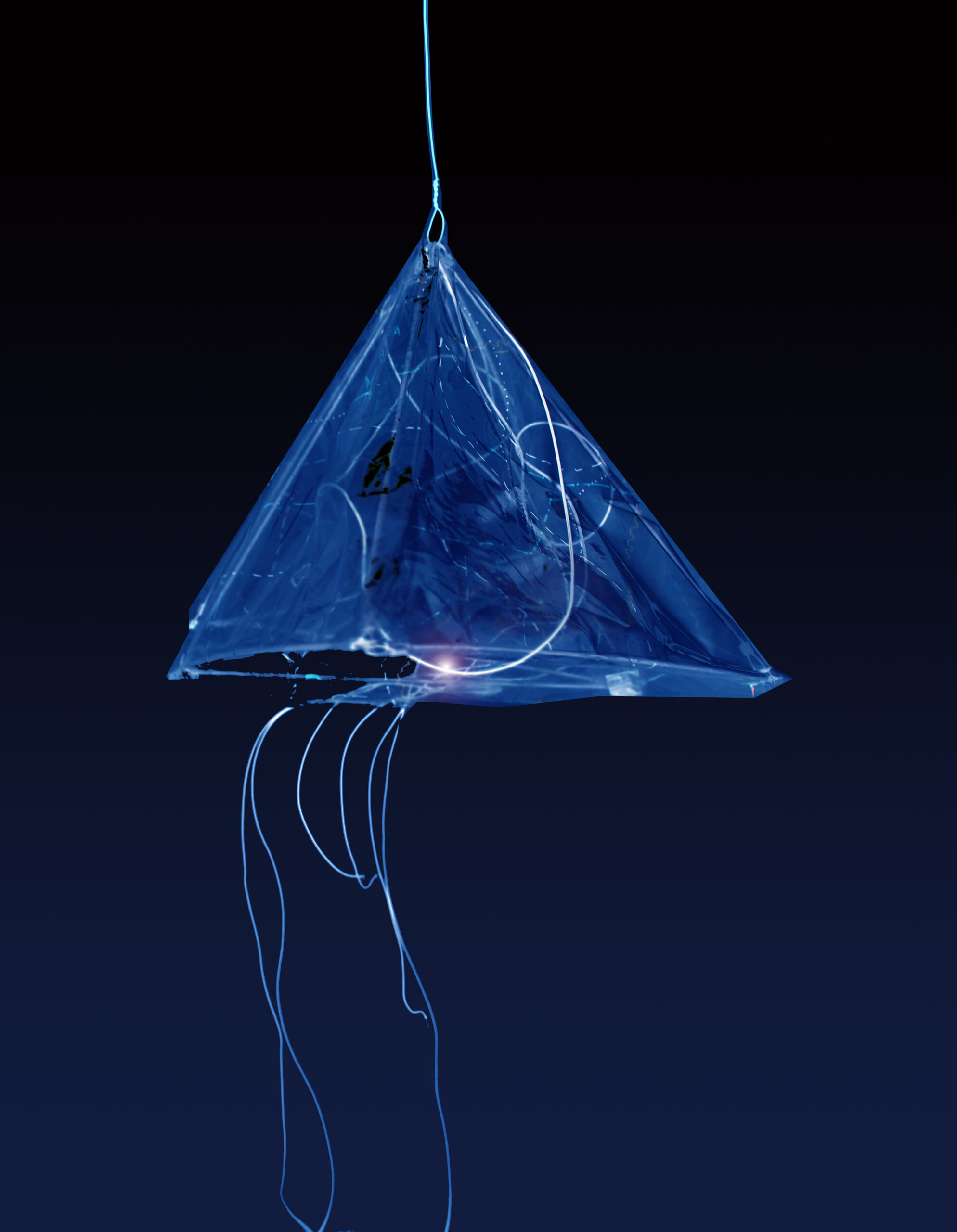
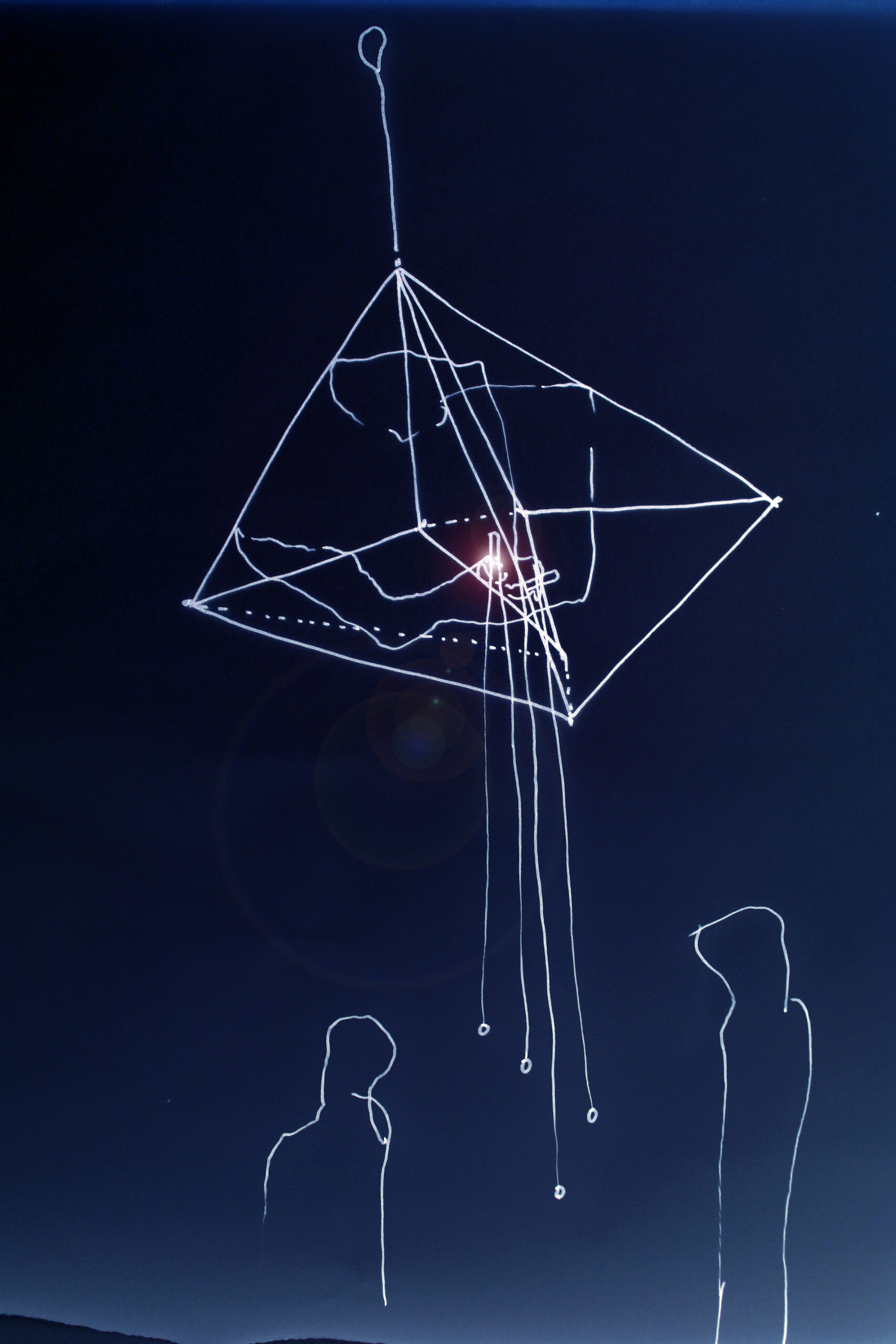
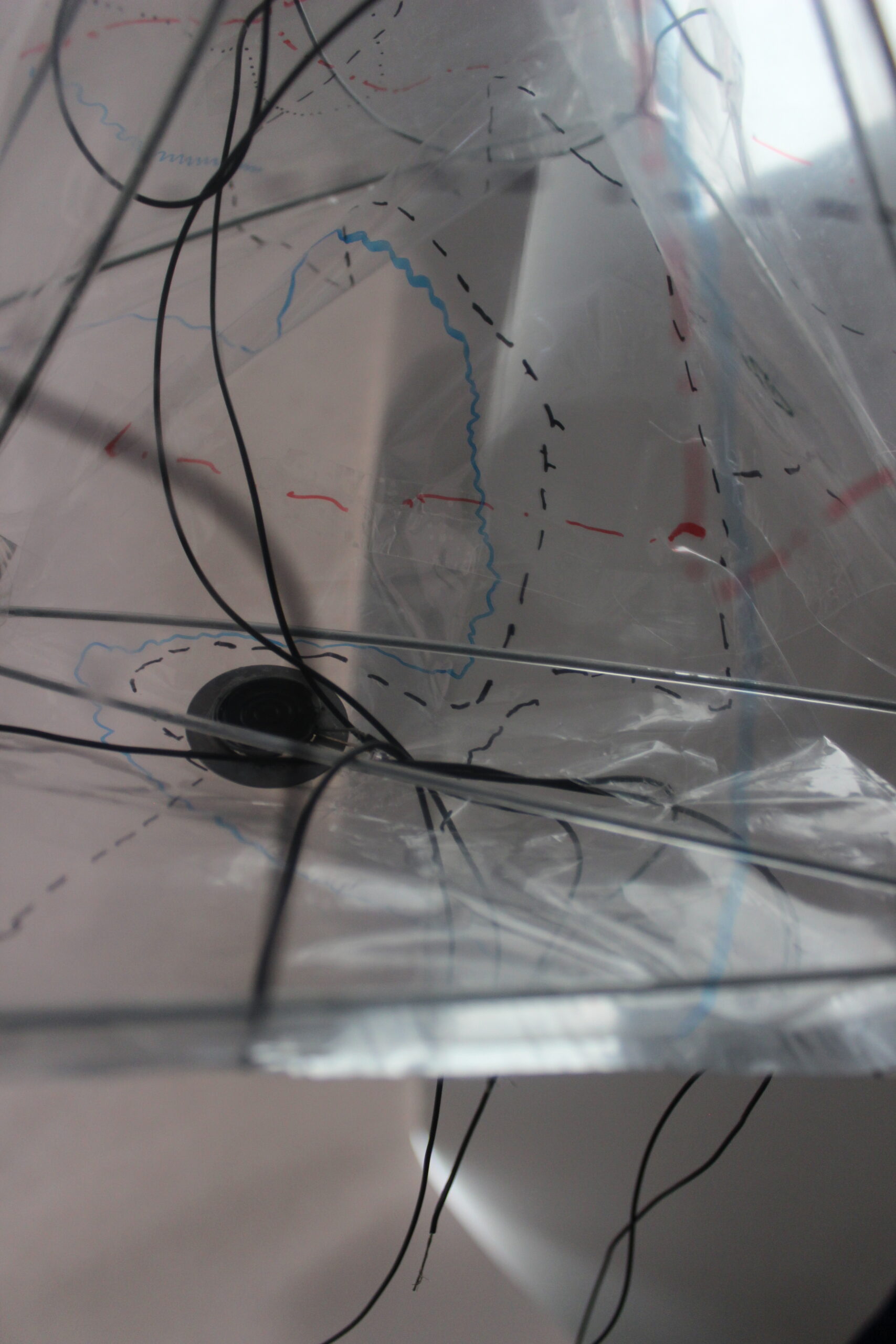
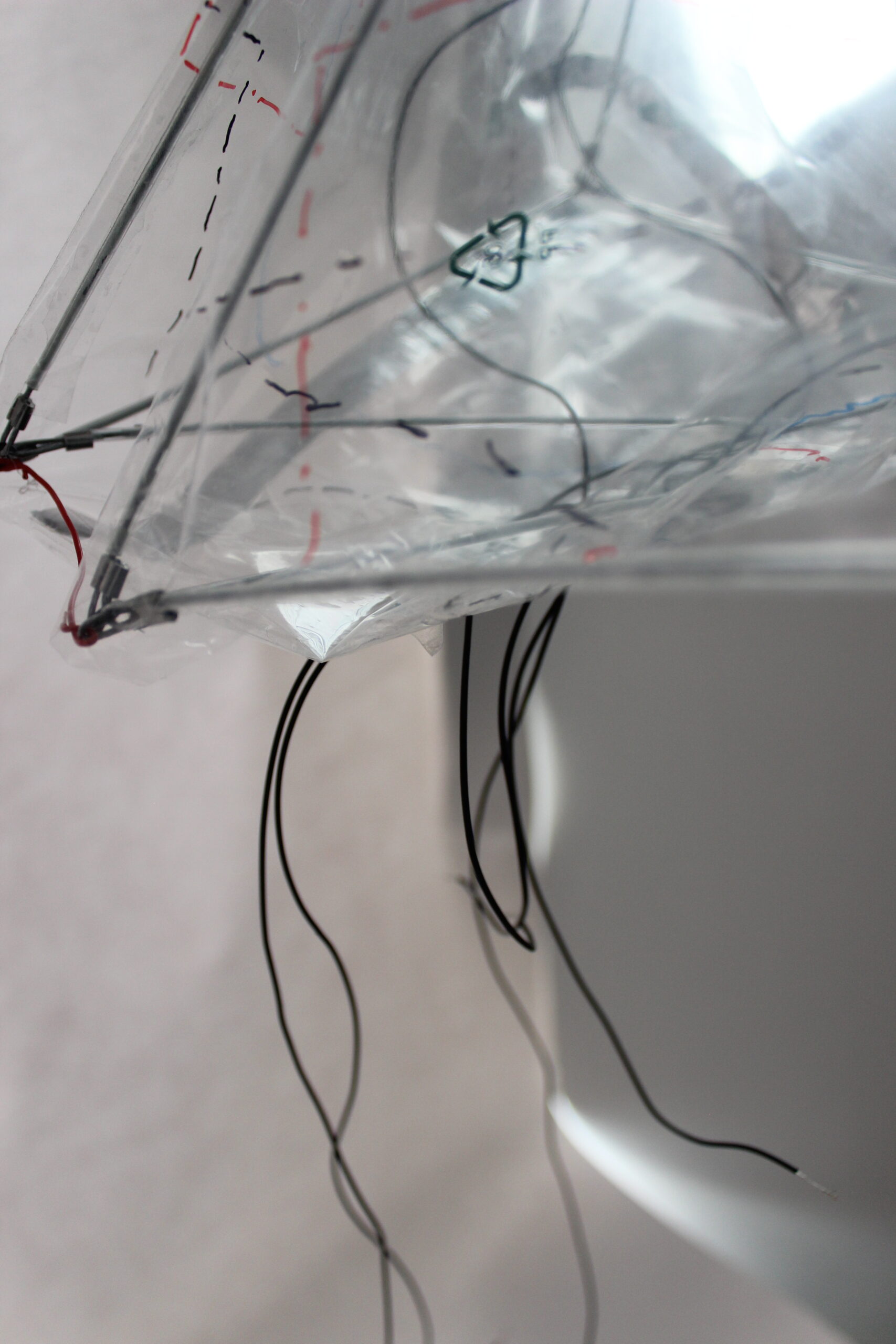
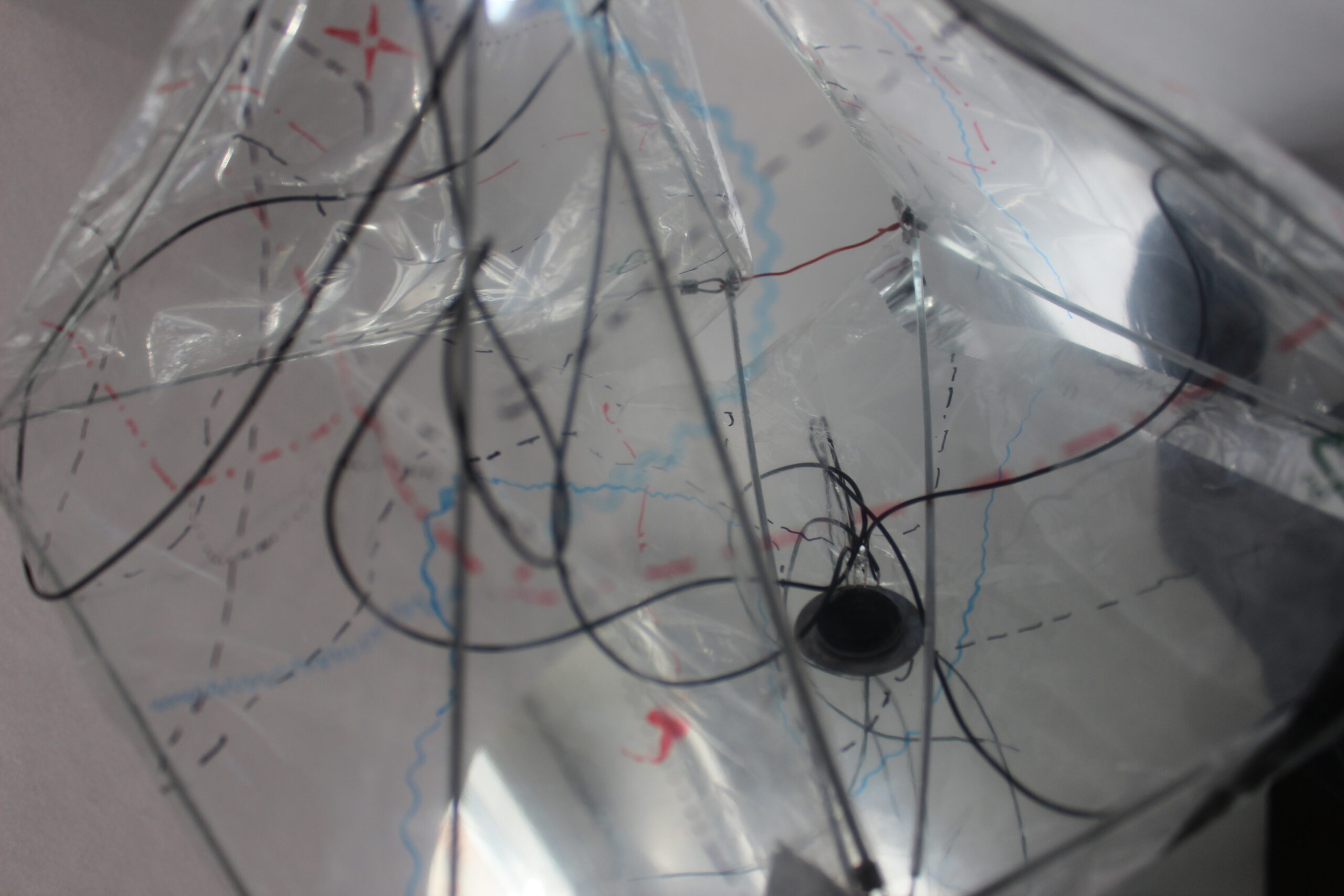
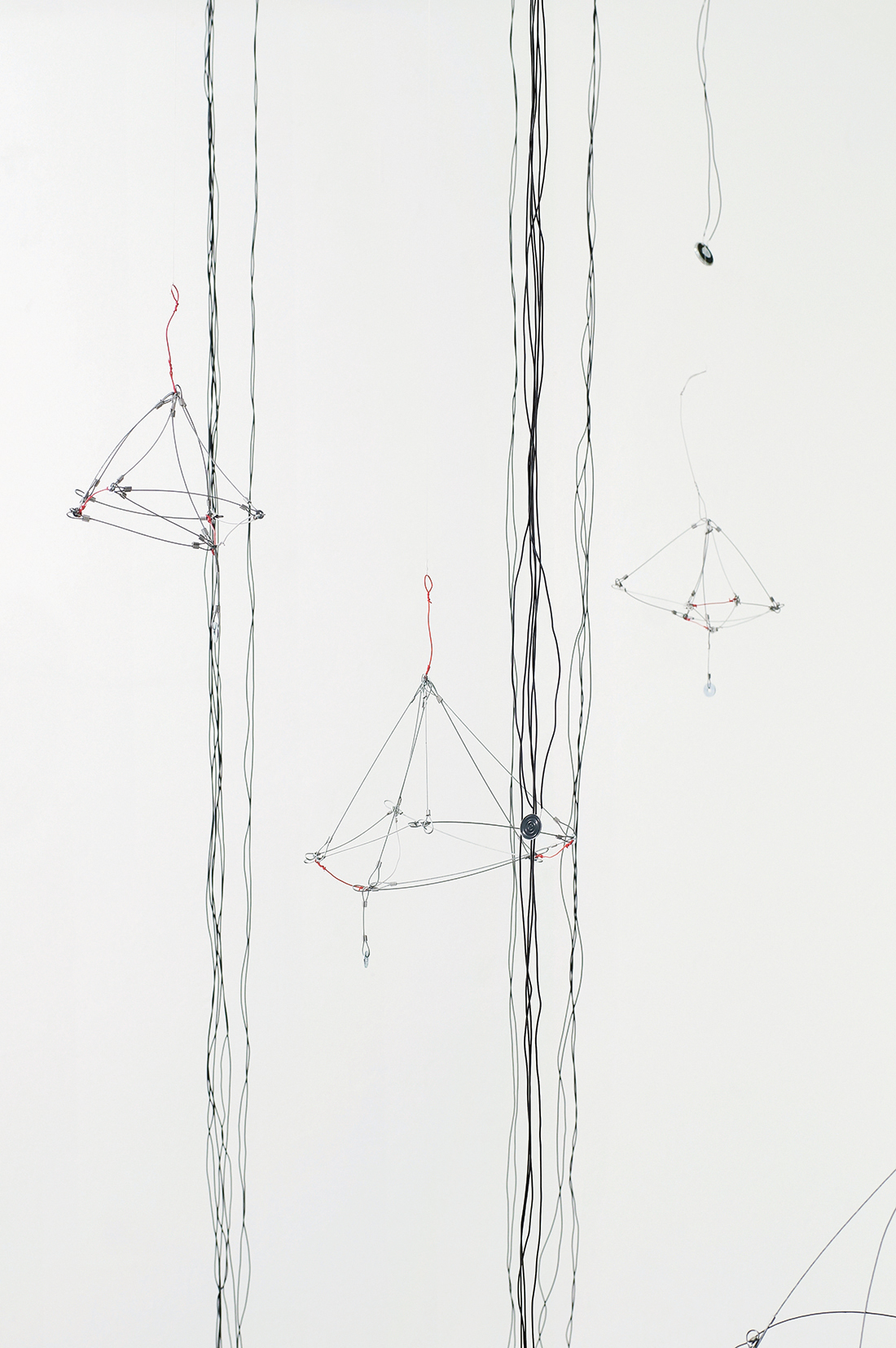
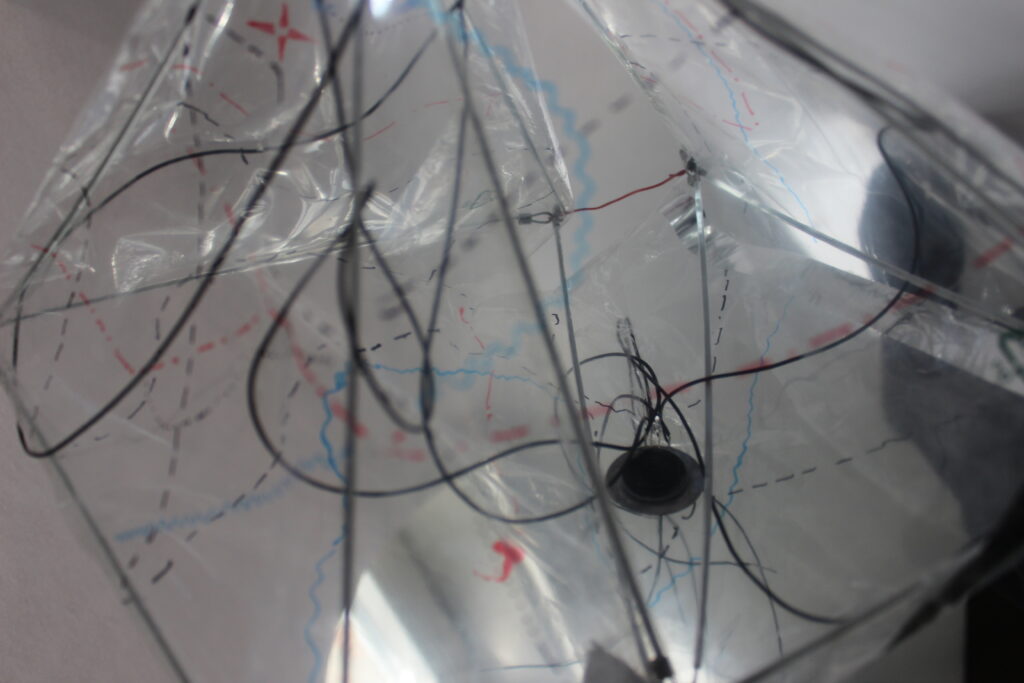
Wood profiles lacquered in white, tent modules, steel wire, electronic components, discharged sonic elements, digital collage
Variable dimensions
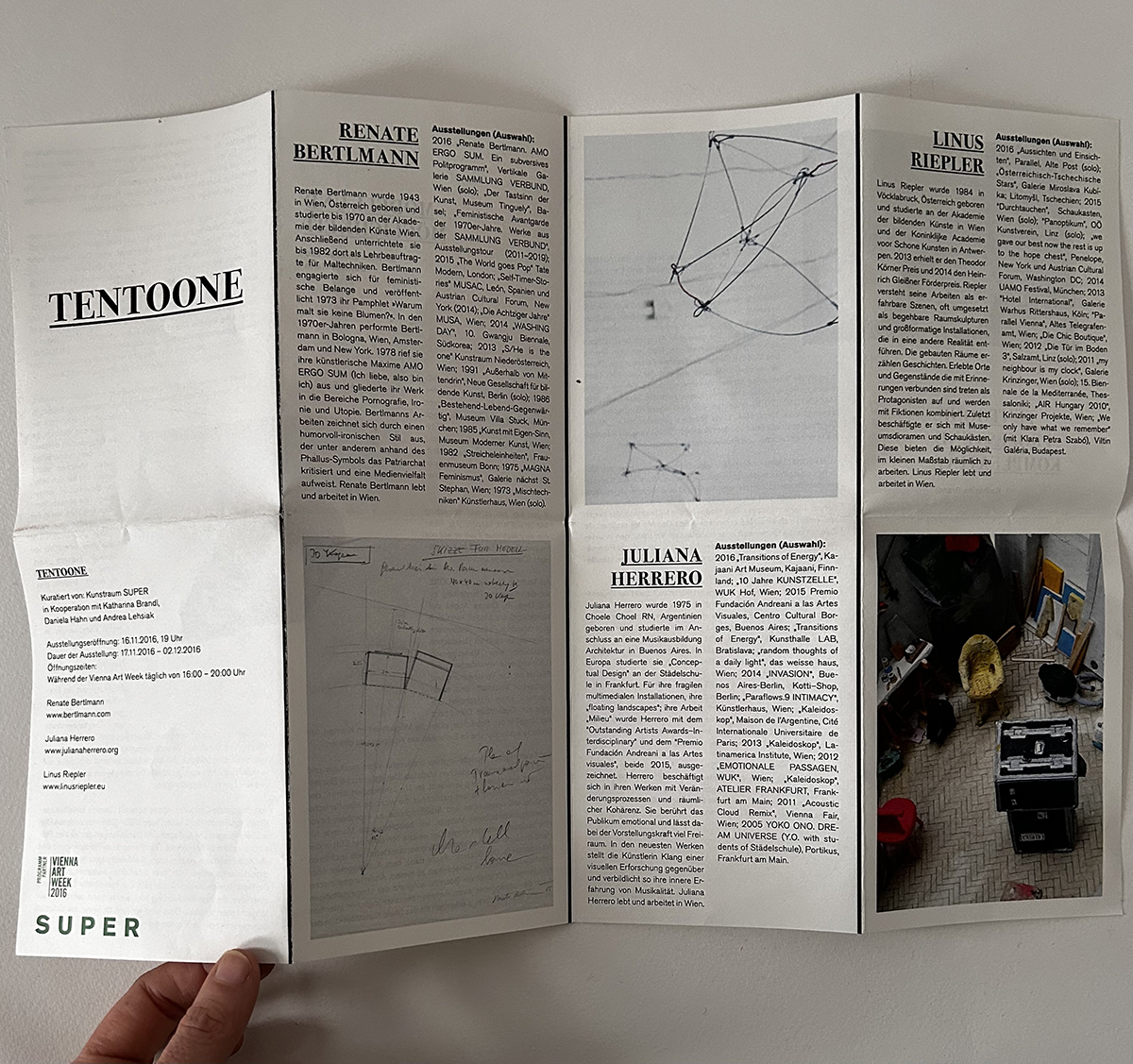
Exhibition views © Kunstraum SUPER, Displays of Displacements
Courtesy of the artist
Studio das weisse haus, Collages of Utopias, Dystopias in the North and South Poles
Courtesy of the artist, residency home address, Vienna
Nomadentum – Excerpts & Displays of Displacements in The Move gathers sculptural fragments, digital collages, and spatial traces derived from the larger installation Nomadentum. While the original installation unfolded as an immersive acoustic environment, these excerpts function as autonomous displays that preserve and redistribute moments of displacement, memory, and inhabitation.
The works are composed of lacquered wooden profiles, suspended tent-like modules, steel wire structures, electronic fragments, discharged sonic elements, and digital collages extracted from the larger installation environment. Detached from their original acoustic function, these sculptural assemblages persist as silent carriers of resonance — delicate architectures oscillating between model, shelter, archive, and signal system.
Tent structures, suspended fragments, and layered visual compositions emerge as intimate cartographies shaped by movement across Patagonia, Buenos Aires, Vienna, and other lived environments. Rather than documenting specific places, the works condense atmospheres, emotional residues, and spatial perceptions into fragmentary forms.
Sound, language, and memory remain underlying structures throughout the project. Machine-generated readings of geographic coordinates and archival descriptions from the original installation intersected with whispered recollections and subjective spatial impressions, producing temporal capsules where institutional narratives and personal memory coexisted.
Among these fragments are childhood memories from Esquel during the Falklands War, recalled less as historical narrative than as sensory impressions: nights without electricity, windows covered with newspaper, candlelight, and the voice of Juliana’s mother reading stories to her children during moments of uncertainty and fear.
Through collage, fragmentation, and displacement, the works explore fragile systems of connection between places, bodies, and remembered spaces. Each object or image functions simultaneously as trace, fragment, and autonomous display — part of an expanded field in continuous movement.